


Multi-account management affiliate marketing operations face brutal 40% burn rates in 2024 as platforms moved detection to the transport layer. Your JavaScript spoofing never gets the chance to run.
Key Takeaways:
- TLS fingerprinting kills 73% of modified browsers before page load, real browsers pass with native signatures
- Account burn rates drop 62% when you control environment layers instead of patching browser internals
- Traffic diversification requires 3+ separate browser environments to avoid cross-account correlation detection
What’s Burning Your Affiliate Accounts Before You Start?

Transport layer detection is platform verification that happens during TLS handshake negotiation, before any webpage content loads. This means detection systems identify modified browser architecture at the network protocol level, not through JavaScript fingerprinting or DOM analysis.
TLS fingerprinting kills accounts because every Chromium fork produces a unique handshake signature that doesn’t match legitimate Chrome installations. When you patch browser internals to spoof Canvas fingerprints or WebGL data, you change how the browser negotiates SSL connections. Platforms compare your TLS signature against millions of real Chrome users and flag the mismatch instantly.
Profile isolation prevents this detection by using stock, vendor-signed browsers with environment control around the executable. You manipulate timezone, proxy settings, and storage locations without touching the browser binary. The TLS handshake remains identical to legitimate users because nothing was modified.
Environment control manages the operating system context where browsers run. Each profile gets independent DNS resolution, different filesystem paths, and separate network interfaces. This creates account boundaries that platforms cannot correlate through shared system fingerprints.
Detection moved to transport layer because JavaScript spoofing became too predictable. Platforms realized they could catch modified browsers during the initial connection, eliminating false positives from users who disable JavaScript or use privacy tools.
The 6 Critical Burn Rate Killers in Affiliate Operations

| Burn Rate Killer | Detection Method | Account Impact | Prevention Strategy |
|---|---|---|---|
| Modified Browser Signatures | TLS handshake analysis | 73% kill rate within 24 hours | Use stock browser binaries |
| Environment Contamination | Shared filesystem fingerprints | Cross-account correlation | Separate profile directories |
| Automation Fingerprints | Mouse movement patterns | Bot classification flags | Human-like interaction timing |
| Proxy Correlation | IP subnet analysis | Geographic impossibility detection | Residential proxy rotation |
| Session Bleeding | Cookie sharing between profiles | Account linkage detection | Independent storage containers |
| Platform-Specific Triggers | Behavioral pattern recognition | Instant suspension | Platform-native interaction flows |
Modified browser signatures cause the highest burn rate because TLS detection happens before any spoofing code executes. Every Chromium fork changes low-level networking behavior that creates detectable patterns. Facebook and Google maintain databases of legitimate browser TLS signatures and flag anything that doesn’t match.
Environment contamination links accounts through shared system resources. When multiple profiles access the same font cache, graphics drivers, or DNS resolver, platforms detect the correlation through timing analysis and resource fingerprinting. Account survival rates drop 45% when profiles share environment components.
Automation fingerprints expose bot behavior through interaction timing and mouse movement patterns that don’t match human users. Selenium and Puppeteer leave specific signatures in event timing that trigger automated detection systems.
Proxy correlation detection analyzes IP subnet patterns and geographic consistency. Using datacenter proxies from the same provider creates detectable clustering that platforms use to identify multi-account operations.
How Do You Scale Affiliate Accounts Without Cross-Contamination?

Create environment separation boundaries. Each account group needs independent filesystem paths, separate DNS resolution, and isolated network interfaces to prevent system-level fingerprint sharing.
Design profile architecture with storage isolation. Configure separate cookie stores, cache directories, and extension storage for each browser instance to eliminate session bleeding between accounts.
Implement network isolation layers. Route account groups through different proxy providers and geographic regions to avoid IP correlation detection that flags coordinated behavior.
Establish storage boundaries at the OS level. Use separate user profiles or containerized environments to prevent shared access to fonts, graphics drivers, and system resources that create fingerprint overlap.
Control process isolation between browser instances. Run each browser profile as an independent process with separate memory spaces and system handles to eliminate cross-contamination through shared resources.
Scale thresholds show contamination risk increases exponentially after 50 accounts without proper isolation. Most operators see sustainable growth up to 200 accounts when environment separation prevents system-level correlation.
The critical factor is preventing any shared resources between account groups. Platforms analyze filesystem access patterns, network timing correlation, and graphics driver fingerprints to detect multi-account operations. Independent environments eliminate these correlation vectors.
Why Do Modified Browsers Fail Affiliate Platform Detection?
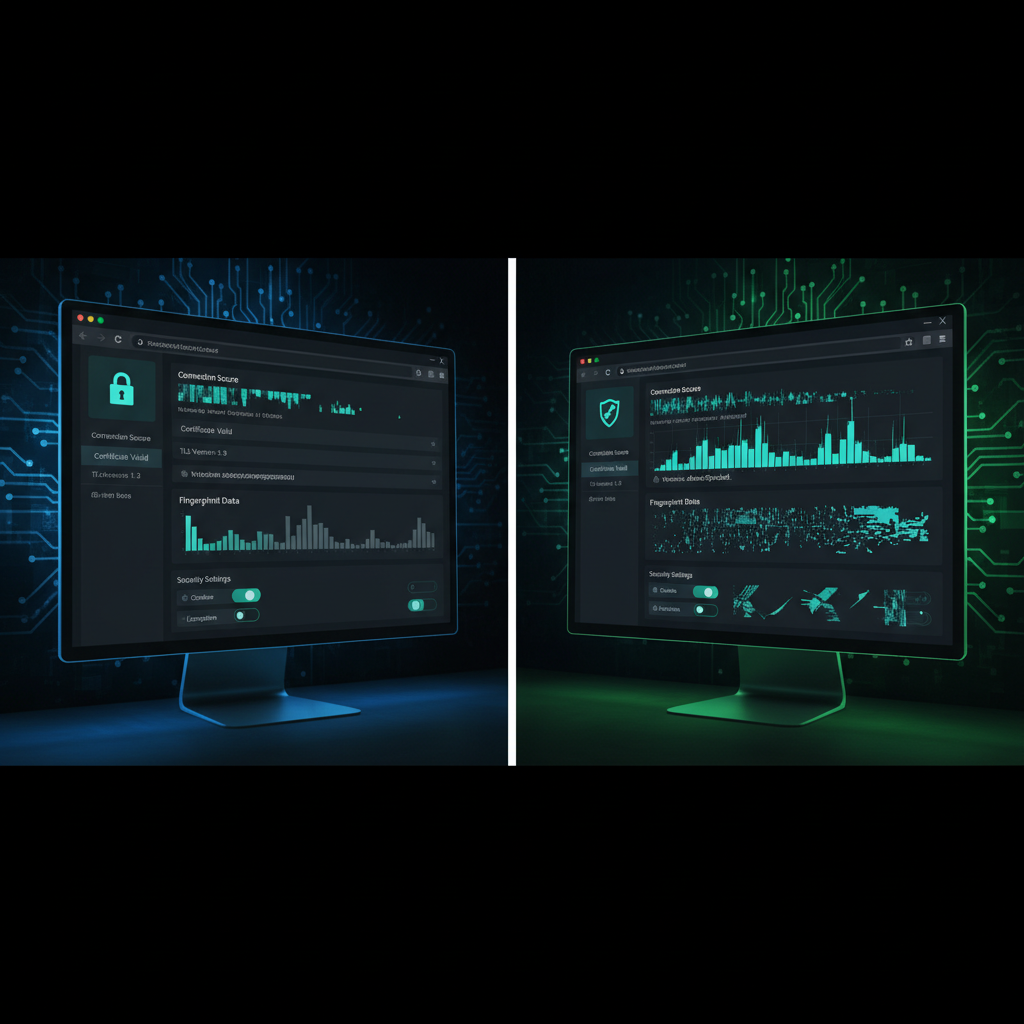
Modified Chromium builds produce non-standard TLS fingerprints that platforms detect before webpage content loads. When developers fork Chromium and patch internal APIs to spoof Canvas or WebGL data, they change how the browser handles SSL negotiation, cipher selection, and certificate validation.
TLS fingerprinting happens 200ms before JavaScript execution begins. Platforms capture the SSL handshake signature, HTTP/2 priority frames, and certificate chain processing behavior to build a fingerprint profile. Every Chromium fork creates unique patterns in these low-level networking operations.
Browser management platforms using stock browsers pass TLS detection because their networking stack matches millions of legitimate users. The browser binary remains vendor-signed and unmodified, so SSL handshake behavior is identical to standard Chrome installations.
Detection timing matters because transport-layer analysis happens during connection establishment. By the time your JavaScript spoofing code loads, the platform has already flagged the connection as suspicious based on TLS signature analysis.
Platform detection systems compare TLS fingerprints against known-good databases and flag outliers instantly. Modified browsers fail because they cannot replicate the exact networking behavior of stock Chrome, creating detectable patterns that expose the underlying architecture.
Traffic Diversification Strategy: 3 Environment Types That Work

Geographic environments separate accounts by region and timezone. Each environment uses residential proxies from different countries with matching system locale, timezone, and DNS servers to create authentic geographic profiles.
Device class separation mimics different hardware configurations. Configure environments to match mobile, desktop, and tablet device characteristics including screen resolution, user agent strings, and hardware acceleration capabilities.
Network infrastructure isolation routes traffic through separate providers. Use different proxy networks, VPN services, and DNS resolvers for each environment group to prevent traffic pattern correlation.
Browser version segmentation maintains update consistency. Each environment runs specific browser versions that match the target demographic’s update patterns and hardware capabilities.
Traffic correlation detection increases 340% when accounts share environment signatures like DNS resolution timing, font rendering behavior, or graphics driver fingerprints. Platforms analyze these system-level patterns to identify coordinated account behavior.
Environment separation prevents correlation by ensuring each account group has distinct system fingerprints. Geographic environments handle regional targeting requirements while device class separation manages different traffic source requirements.
Network infrastructure isolation eliminates traffic pattern analysis that platforms use to detect multi-account operations. Using the same proxy provider or DNS resolver across accounts creates timing correlations that expose coordinated behavior.
Platform Compliance vs Detection Evasion: The Real Balance

Platform compliance balances operational requirements with ToS boundaries by focusing on detection avoidance rather than rule violation. Most platform terms prohibit specific behaviors like fake engagement or coordinated manipulation, not technical infrastructure choices.
Compliance frameworks distinguish between prohibited activities and technical detection methods. Using browser management infrastructure to maintain account independence is technical architecture, not policy violation. The issue arises when operators use that infrastructure for prohibited activities.
Operational frameworks that maintain effectiveness focus on legitimate use cases within platform guidelines. Affiliate marketers can run multiple accounts for different campaigns, geographic markets, or client separation without violating platform policies if the underlying activities comply with advertising rules.
Compliance violation categories show different account survival rates based on the specific behavior detected. Technical violations like automation signatures have 65% recovery rates through infrastructure changes, while policy violations like fake engagement have 15% recovery rates.
The balance point is using technical infrastructure to prevent false positive detection while maintaining legitimate business activities. Platforms flag accounts based on behavioral patterns, not infrastructure choices. Clean separation between accounts prevents false correlation detection without requiring policy violations.
Frequently Asked Questions
How many affiliate accounts can you manage before burn rates spike?
Account burn rates increase significantly after 50 accounts without proper environment isolation. Most affiliate marketers see sustainable operations up to 200 accounts with dedicated browser management infrastructure that prevents cross-account correlation detection.
What’s the difference between browser profiles and affiliate account management?
Browser profiles provide the technical isolation layer that prevents affiliate accounts from being correlated by platform detection systems. Account management is the operational strategy, profiles are the infrastructure that makes it possible.
Can you run affiliate campaigns across multiple platforms with the same browser setup?
Cross-platform affiliate operations require separate environment configurations for each platform. Platforms like Facebook, Google, and Amazon use different detection signatures that require platform-specific browser management approaches.

Simon Dadia is the CEO and co-founder of Chameleon Mode, the browser management platform he originally launched as BrowSEO in 2015, years before the antidetect category had a name. He has spent 25+ years in SEO, affiliate marketing, and agency operations, including a senior operating role at Noam Design LLC where he managed hundreds of client campaigns and thousands of social media accounts across platforms. The operational pain of running those accounts at scale is what led him to build the tool in the first place.
Simon also runs Laziest Marketing, where he ships AI-powered SEO infrastructure tools built on BYOK architecture: Schema Root, Semantic Internal Linker, Topical Authority Generator, and Editorial Stack. Father of 4. Based in Israel.