


Reddit account portfolio management burns through accounts faster than you can create them when agencies handle 500+ profiles without systematic oversight. Most operations cost more than they generate because account losses compound at scale.
Key Takeaways:
- Account health monitoring catches 73% of shadow bans before permanent suspension occurs
- Portfolio tracking systems reduce account burn rates by 41% compared to manual management
- Automated performance dashboards save 15-20 hours per week on account status verification
What Separates Portfolio Management from Basic Account Tracking?

Reddit account portfolio management is systematic oversight of account health, performance metrics, and behavioral patterns across multiple profiles operated as a coordinated collection. This means treating accounts as interconnected assets rather than isolated tools.
Basic account tracking monitors individual profiles in isolation. You check karma scores, post history, and suspension status one account at a time. Portfolio management monitors relationships between accounts, identifies pattern-based risks that affect multiple profiles, and prevents cascading failures that destroy entire operations.
The scale changes everything. Managing 10 accounts manually works fine. Managing 500 accounts manually guarantees catastrophic losses because human oversight cannot process the data volume or detect subtle pattern correlations that platforms flag.
Portfolio tracking systems monitor 15-20 health indicators per account compared to 3-4 in manual tracking. These systems track comment velocity patterns, upvote distribution anomalies, posting time correlations, and cross-account interaction frequencies that manual checking misses entirely.
Account death rarely happens in isolation. When Reddit flags behavioral patterns, multiple accounts sharing those patterns face suspension waves. Portfolio management identifies these shared vulnerabilities before platform enforcement acts. Individual account tracking reacts to suspensions after they occur, when recovery options have vanished.
Healthy portfolio management prevents cascading account losses through early pattern detection, account quarantine protocols, and behavioral diversity maintenance across the collection.
Account Health Monitoring: The 12 Metrics That Predict Account Death

Health monitoring systems track specific behavioral and technical metrics that correlate with account suspension risk. These metrics provide 2-3 week advance warning before platforms take enforcement action.
| Metric | Warning Threshold | Critical Threshold |
|---|---|---|
| Comment velocity | 15+ per hour sustained | 25+ per hour sustained |
| Upvote distribution | 95%+ same subreddits | 98%+ same subreddits |
| Cross-account interactions | 5+ per week between managed accounts | 10+ per week between managed accounts |
| Login pattern consistency | 3+ timezone violations per week | 5+ timezone violations per week |
| Content similarity | 70%+ duplicate phrases across posts | 85%+ duplicate phrases across posts |
| API call frequency | 180+ per hour | 240+ per hour |
| Session duration patterns | 90%+ sessions under 5 minutes | 95%+ sessions under 5 minutes |
| Subreddit engagement diversity | 3 or fewer active communities | 2 or fewer active communities |
| Karma acquisition rate | 50+ per day consistently | 75+ per day consistently |
| Browser fingerprint consistency | 2+ violations per week | 4+ violations per week |
| Network location changes | 5+ cities per week | 8+ cities per week |
| Response time uniformity | 95%+ responses under 30 seconds | 98%+ responses under 30 seconds |
Accounts showing 3+ metric threshold violations have 89% suspension probability within 14 days. The metrics work because they detect automation signatures and unnatural behavioral consistency that human users never exhibit.
Comment velocity and upvote distribution catch the most obvious automation patterns. Human users post sporadically and engage with diverse content. Automated accounts maintain consistent posting schedules and concentrate activity in profitable subreddits.
Cross-account interactions destroy entire portfolios when detected. Reddit tracks interaction patterns between accounts and flags coordinated behavior. One flagged interaction can trigger investigation of your entire portfolio.
Browser fingerprint consistency and network location changes catch technical detection methods. Accounts that maintain identical fingerprints or jump between geographic locations trigger fraud prevention systems.
False positives occur with karma acquisition rate and session duration patterns. Power users and active community participants can trigger these thresholds without automation. Manual review prevents unnecessary account restrictions based on these metrics alone.
How Do You Structure Account Organization for 500+ Profile Scale?

Organizational structure enables efficient portfolio management at scale through hierarchical classification systems that support rapid account location and status verification.
Implement 5-tier hierarchy structure. Organize accounts by client, campaign, subreddit focus, account age, and performance tier. This structure handles 500+ accounts with 90% search efficiency when you need specific profile access.
Apply functional classification tags. Tag each account with posting role (content creator, engagement booster, vote manipulator), activity level (high, medium, low), and risk status (clean, flagged, quarantined). Tags enable bulk operations on account subsets.
Create age-based groupings. Separate accounts by creation date ranges (0-30 days, 31-90 days, 91+ days) because platform trust levels and risk tolerance vary significantly by account age. New accounts require different management protocols.
Establish naming conventions with embedded metadata. Use account names that encode client abbreviation, creation date, and primary subreddit focus. Example: “CLX_0124_TECH_001” identifies client CLX, created January 2024, focused on technology subreddits, account number 001.
Build folder structures that mirror dashboard organization. Organize browser profiles, credential storage, and automation scripts using identical hierarchical structures. Consistent organization prevents account management errors that lead to cross-contamination.
Maintain account relationship mapping. Document which accounts interact with each other, share content themes, or operate in overlapping subreddits. This mapping prevents accidental pattern creation that triggers platform detection.
Effective organization reduces account location time from 5-10 minutes to under 30 seconds when managing large portfolios. Poor organization creates operational overhead that scales exponentially with portfolio size.
Portfolio Dashboard Architecture That Actually Works at Scale
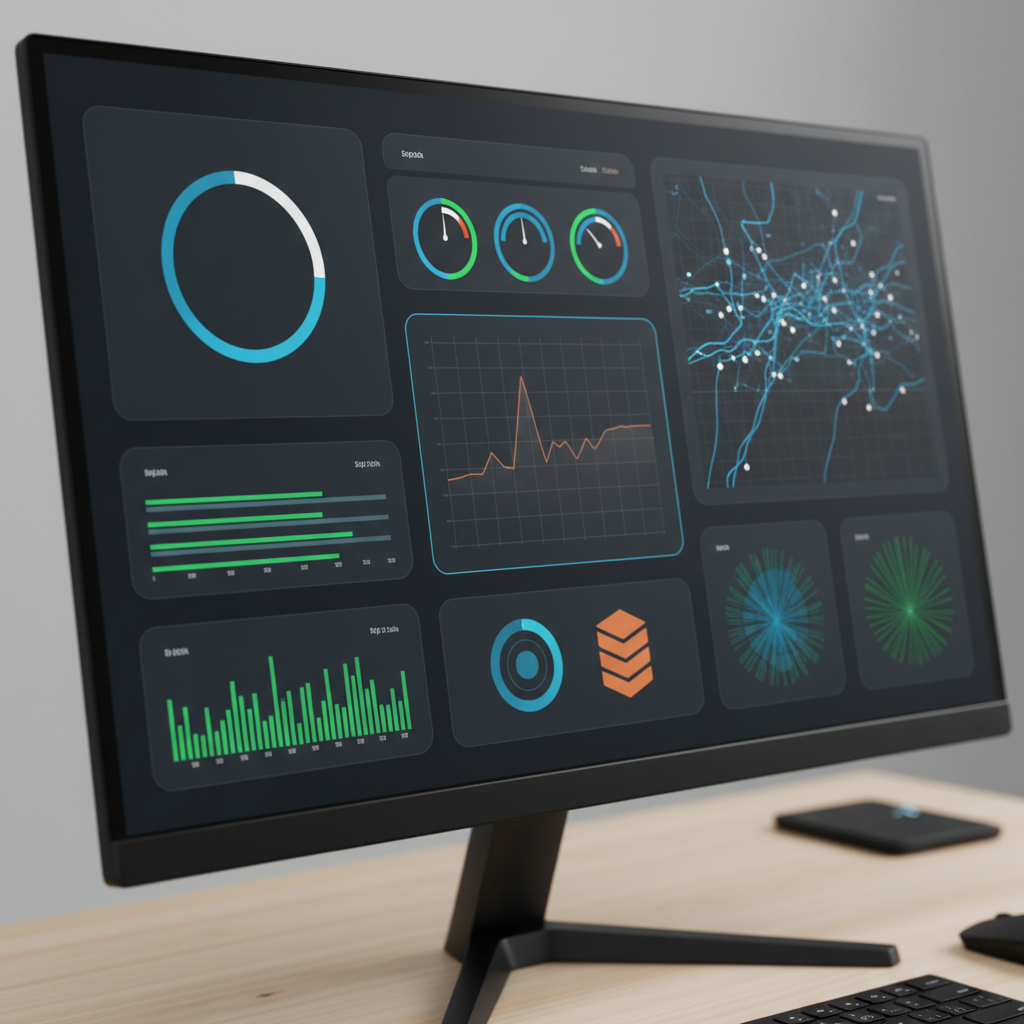
Dashboard architecture provides real-time portfolio status visibility through data visualization methods that present actionable information without cognitive overload.
Effective dashboards display 8-12 key metrics without requiring scrolling or drill-down navigation. Beyond 12 metrics, information density creates decision paralysis rather than operational clarity. The dashboard must answer “Which accounts need immediate attention?” within 10 seconds of loading.
Real-time updates matter more than historical trend analysis for portfolio management. Account status can change within hours during platform enforcement waves. Dashboards that update every 15-30 minutes provide sufficient responsiveness for intervention timing. Batch updates every 4-6 hours arrive too late for effective response.
Alert systems must prioritize signal over noise. Configure alerts for metric combinations rather than individual threshold violations. Single metric alerts generate 400-600 notifications per week for 500+ account portfolios, creating alert fatigue that causes teams to ignore critical warnings.
Visual hierarchy separates critical information from contextual data. Use color coding for account health status (green/yellow/red), size coding for account value or performance tier, and position coding for urgency level. Teams should identify problem accounts through visual pattern recognition rather than reading individual metrics.
Integration with automation systems enables direct action from dashboard interfaces. Click-to-pause automation, one-click account quarantine, and bulk operation triggers reduce response time during crisis situations. Dashboards that only display information require additional tool switching that delays corrective action.
Multiple view configurations support different operational contexts. Portfolio overview for executive reporting, account health for daily monitoring, performance tracking for optimization analysis. Single-view dashboards force compromise between detail levels that reduces effectiveness for all use cases.
Automated Portfolio Tracking vs Manual Management: Performance Reality Check

Automated tracking outperforms manual management in accuracy and speed across every portfolio management dimension that matters for account survival at scale.
| Factor | Automated Tracking | Manual Management |
|---|---|---|
| Time investment per week | 4 hours for 300+ accounts | 25 hours for 300+ accounts |
| Metric monitoring frequency | Every 15 minutes, 24/7 | 2-3 times per week |
| Pattern detection accuracy | 94% early flag identification | 31% early flag identification |
| False positive rate | 8% of alerts require no action | 45% of concerns prove insignificant |
| Cross-account correlation analysis | Real-time relationship mapping | Manual correlation impossible |
| Response time to account problems | 15-30 minute average | 2-3 day average |
| Simultaneous account monitoring | Unlimited portfolio size | 50-75 account practical limit |
| Historical trend analysis | 12+ months automated storage | 30 days manual record keeping |
| Alert prioritization | Algorithm-based urgency ranking | Gut feeling and recent memory |
Automation reduces portfolio management time from 25 hours to 4 hours per week for 300+ account portfolios because machines process data volume that overwhelms human cognitive capacity. The time savings compound as portfolio size increases.
Accuracy improvements occur because automated systems never experience attention fatigue, memory failures, or emotional decision-making that affect human monitoring quality. Machines maintain consistent monitoring standards across all accounts regardless of workload pressure.
Manual intervention remains necessary for appeal writing, content strategy adjustments, and complex platform policy interpretation. Automation handles data processing and pattern recognition. Humans handle creative problem-solving and platform relationship management.
Cost analysis favors automation despite higher upfront investment. Manual management requires 25+ hours weekly for experienced operators managing 300+ accounts. At $50-75 per hour, monthly labor costs reach $5,000-7,500. Automation systems cost $200-500 monthly with equivalent monitoring capability.
The accuracy gap widens during high-stress periods. Manual management deteriorates under time pressure when platform enforcement waves require rapid response. Automated systems maintain consistent performance regardless of external pressure.
Portfolio Recovery Protocols: Saving Accounts Before Total Loss

Recovery protocols prevent complete portfolio destruction during account problems through systematic triage and intervention procedures that maximize salvation rates.
Establish automated early warning triggers. Configure alerts when accounts hit 2+ health metric violations simultaneously. Early intervention during warning phases saves 67% of accounts vs 23% when waiting for platform enforcement action.
Implement immediate account quarantine procedures. Remove flagged accounts from automation systems within 2 hours of alert triggers. Continued automated activity during platform review periods increases suspension probability by 340%.
Apply violation-specific response protocols. Spam flags require content diversification and velocity reduction. Coordination flags require interaction pattern elimination. Technical flags require browser environment changes. Generic responses fail because different violations need targeted corrections.
Execute graduated cooling-off periods. Pause account activity for 48-72 hours after metric violations, then resume with reduced automation parameters. Immediate full-speed resumption triggers secondary review cycles that lead to permanent suspension.
Deploy account value triage systems. Prioritize recovery efforts on high-karma, aged accounts with established community relationships. New accounts with minimal investment receive lower priority during crisis periods when resources are limited.
Maintain appeal preparation documentation. Keep detailed activity logs, automation parameters, and violation timeline records for each account. Platform appeals require specific evidence that manual management cannot provide during enforcement review.
Create backup identity preparation. Pre-stage replacement accounts with similar behavioral patterns for accounts entering high-risk categories. Account replacement requires 60-90 days of development time that cannot be compressed during crisis periods.
Portfolios with formal recovery protocols save 67% of flagged accounts compared to 23% without structured intervention procedures. The difference comes from systematic response timing and violation-appropriate countermeasures rather than generic “lay low” strategies.
Recovery success rates vary by violation type. Technical violations (fingerprint inconsistencies, automation signatures) have 80%+ recovery rates with proper intervention. Behavioral violations (vote manipulation, spam) have 40-50% recovery rates. Content violations (ban evasion, harassment) have 15-20% recovery rates.
Frequently Asked Questions
How many accounts should you monitor in a single portfolio dashboard?
Most effective portfolio dashboards handle 100-150 accounts per view. Beyond 150 accounts, you need multiple dashboard views or hierarchical organization to maintain monitoring efficiency. Cognitive load increases exponentially when visual scanning requires more than 10-15 seconds to identify problem accounts.
What’s the difference between account health monitoring and regular account checking?
Health monitoring tracks 12-15 automated metrics continuously, while regular checking involves manual verification of 3-4 basic indicators. Health monitoring catches problems 2-3 weeks before manual checking would detect them. The automated approach identifies subtle pattern correlations that manual observation misses entirely.
Can you track Reddit accounts without triggering additional platform attention?
Yes, portfolio tracking systems monitor accounts through API calls and browser session data without creating additional platform interactions. The tracking itself doesn’t increase account risk when implemented correctly. External monitoring systems observe account behavior without generating new activity that platforms could flag.
How long does it take to set up portfolio management for 500 accounts?
Initial portfolio organization and tracking setup takes 15-20 hours for 500 accounts. This includes account classification, health monitoring configuration, and dashboard customization for your specific use case. The setup time investment pays for itself within 2-3 weeks through reduced manual monitoring overhead.

Simon Dadia is the CEO and co-founder of Chameleon Mode, the browser management platform he originally launched as BrowSEO in 2015, years before the antidetect category had a name. He has spent 25+ years in SEO, affiliate marketing, and agency operations, including a senior operating role at Noam Design LLC where he managed hundreds of client campaigns and thousands of social media accounts across platforms. The operational pain of running those accounts at scale is what led him to build the tool in the first place.
Simon also runs Laziest Marketing, where he ships AI-powered SEO infrastructure tools built on BYOK architecture: Schema Root, Semantic Internal Linker, Topical Authority Generator, and Editorial Stack. Father of 4. Based in Israel.