


Get the Semantic Internal Linker → https://chameleonmode.com/ai-seo-era/
Internal linking is the single most underestimated ranking lever in WordPress SEO — and almost everyone does it wrong. The typical approach involves manually inserting links based on keyword matching: find a phrase that looks like it relates to another page, wrap it in an anchor tag, and hope Google figures out the relationship. That method worked in 2014. It does not work now.
Google’s ranking systems evaluate internal links using contextual vectors — a combination of anchor text, surrounding annotation text, source page topic, and destination page topic. A link from “click here” or a bare keyword match carries almost no semantic signal. Worse, random keyword-based linking can actively dilute your site’s topical authority by creating relationships between pages that have no business being connected.
The problem is not that site owners neglect internal linking. The problem is that the tools available to them are still operating on keyword-era logic — matching strings instead of understanding what the content is actually about.
How Google Actually Evaluates Your Internal Links

Google’s Reasonable Surfer Model assigns weight to links based on the probability that a real user would click them in context. Links buried in footers, sidebars, or “related posts” widgets receive minimal weight compared to links embedded naturally in body content where the reader has a genuine reason to follow them.
Beyond placement, the algorithm scores each link using four components: the anchor text itself, the annotation text in the surrounding sentence, the topical context of the source page, and the topical context of the destination page. When all four align — when the anchor describes the destination, the surrounding sentence adds supporting entities, and both pages belong to the same topical cluster — the link passes maximum semantic value.
This is why keyword-matching tools fail. They see the string “internal linking” on two pages and suggest a connection. They cannot evaluate whether those pages share a topical relationship, whether the surrounding sentence provides annotation context, or whether the link placement makes sense within the content’s narrative flow.
Entity-Based Linking: What the Algorithm Actually Wants
Entity-based internal linking replaces keyword matching with topical relationship mapping. Instead of asking “does this phrase appear on another page?”, an entity-driven system asks “what is this content actually about, and which other pages on this site cover semantically related topics?”
The distinction matters because Google’s Knowledge Graph and Phrase-Based Indexing system understand content at the entity level — not the keyword level. When your internal linking mirrors the same entity relationships that the Knowledge Graph expects, you are reinforcing the exact topical signals the algorithm rewards.
An authority post about “OSHA 1910.147 lockout/tagout compliance,” for example, should link to pages covering energy isolation procedures, authorized employee training requirements, and periodic inspection protocols — because those entities are semantically co-occurring within the regulatory compliance cluster. A keyword matcher might link that same page to an unrelated post that happens to mention “compliance” in a different context entirely.
The Semantic Internal Linker: Entity-Driven Knowledge Graphs for WordPress
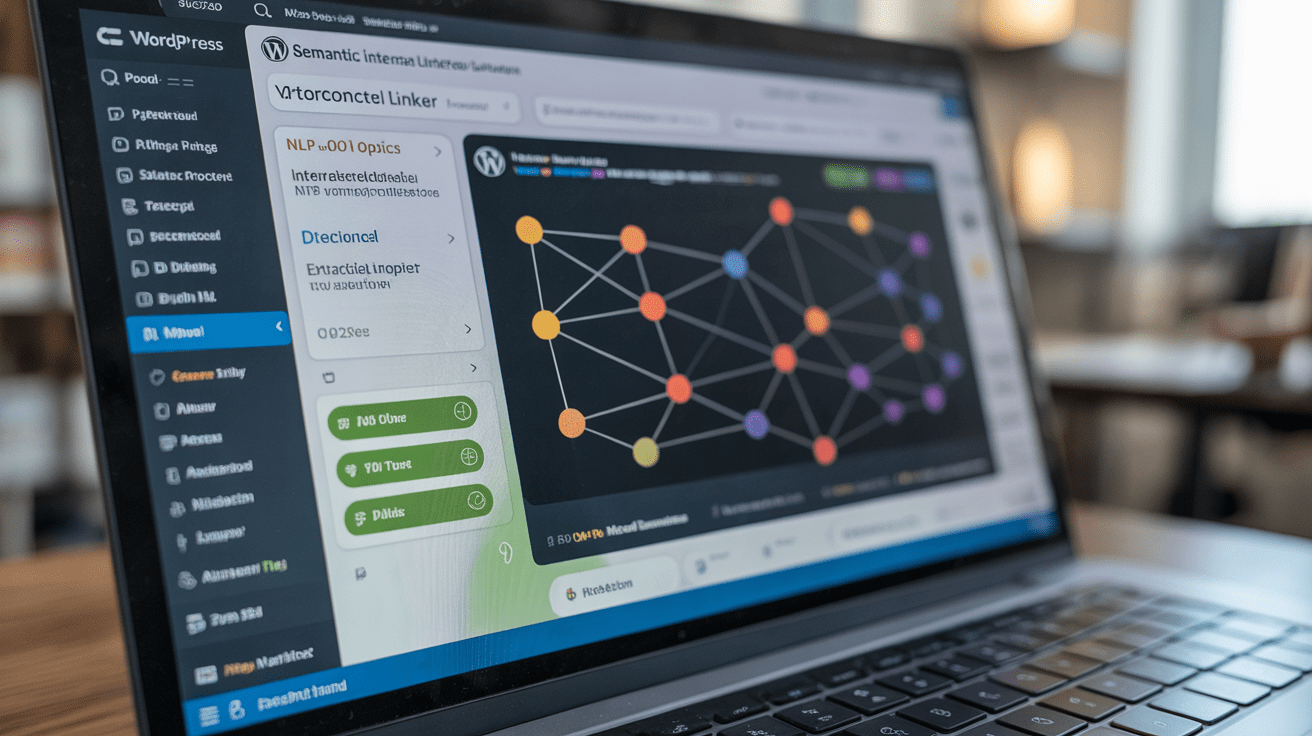
The Semantic Internal Linker (SIL) was built specifically to solve this problem. It analyzes your WordPress content using NLP-based entity extraction, builds a knowledge graph of topical relationships across your entire site, and generates internal link suggestions based on actual semantic connections — not string matching.
Here is what that means in practice. When SIL processes your content library, it identifies the core entities on every page: the topics, concepts, and subject-matter relationships that define what each piece of content is actually about. It then maps those entities against each other, constructing a site-wide knowledge graph that reveals which pages are genuinely related and how authority should flow between them.
The link suggestions SIL generates come with entity-sourced anchor text pulled from analyzed content — not invented keywords or generic phrases. Every suggested anchor is grounded in the actual language your content uses to discuss its topic, which means the contextual vector passed by each link aligns with what the algorithm expects.
Authority Posts and Controlled Link Flow
Not all pages on a site carry equal topical weight. SIL lets you designate authority posts — the pillar pages that anchor a topical cluster — and controls outbound link flow accordingly. Authority pages receive inbound links from supporting content across the cluster, concentrating semantic signals where they matter most.
This is the same architecture that entity-based SEO practitioners build manually, but automated at scale. Instead of maintaining spreadsheets mapping which pages link where, SIL’s knowledge graph handles the relationship mapping and surfaces only the connections that strengthen your site’s topical authority structure.
What SIL Replaces in Your Workflow
If you currently use any of these approaches, SIL replaces them entirely:
Manual internal linking audits where you comb through posts looking for linking opportunities. Keyword-based plugins that suggest links by matching phrases across posts. “Related posts” widgets that generate sidebar links with zero contextual annotation. Random interlinking strategies that connect pages without considering topical relevance or authority flow.
Each of these methods either passes weak semantic signal or creates noise that dilutes your site’s topical focus. SIL’s entity graph eliminates the guesswork by surfacing only the connections that the algorithm’s scoring mechanisms actually reward.
See It Working: Full Setup Walkthrough
I recorded a complete 15-minute demo showing SIL from installation to live link suggestions generating on a real WordPress site. No slides, no theory — just the tool running against real content, building the knowledge graph, and producing entity-sourced link recommendations.
The walkthrough covers installation and configuration (about two minutes), how the entity extraction processes your existing content, setting up authority posts and controlling link direction, and the actual link suggestions SIL generates with their contextual anchor text.
[Watch the full SIL demo and tutorial here →]
The Shift from Keywords to Entities Is Already Here
Google’s move from string matching to entity understanding is not theoretical — it is the operational reality of how ranking works today. NLP pipelines like BERT and MUM tokenize, embed, and score your content at the entity level. Passage Ranking evaluates individual sections of your pages independently. The Knowledge Graph validates entity relationships across your entire domain.
Your internal linking strategy needs to operate at the same level. Keyword-based tools are optimizing for an algorithm that no longer exists. Entity-based linking — the kind that SIL automates — aligns your site architecture with the actual scoring mechanisms Google uses to evaluate authority, relevance, and topical depth.
Get the Semantic Internal Linker → https://chameleonmode.com/ai-seo-era/
Pair it with Schema Root for full entity coverage — structured data that declares your entities to the Knowledge Graph, plus internal linking that reinforces those relationships across every page on your site.


